
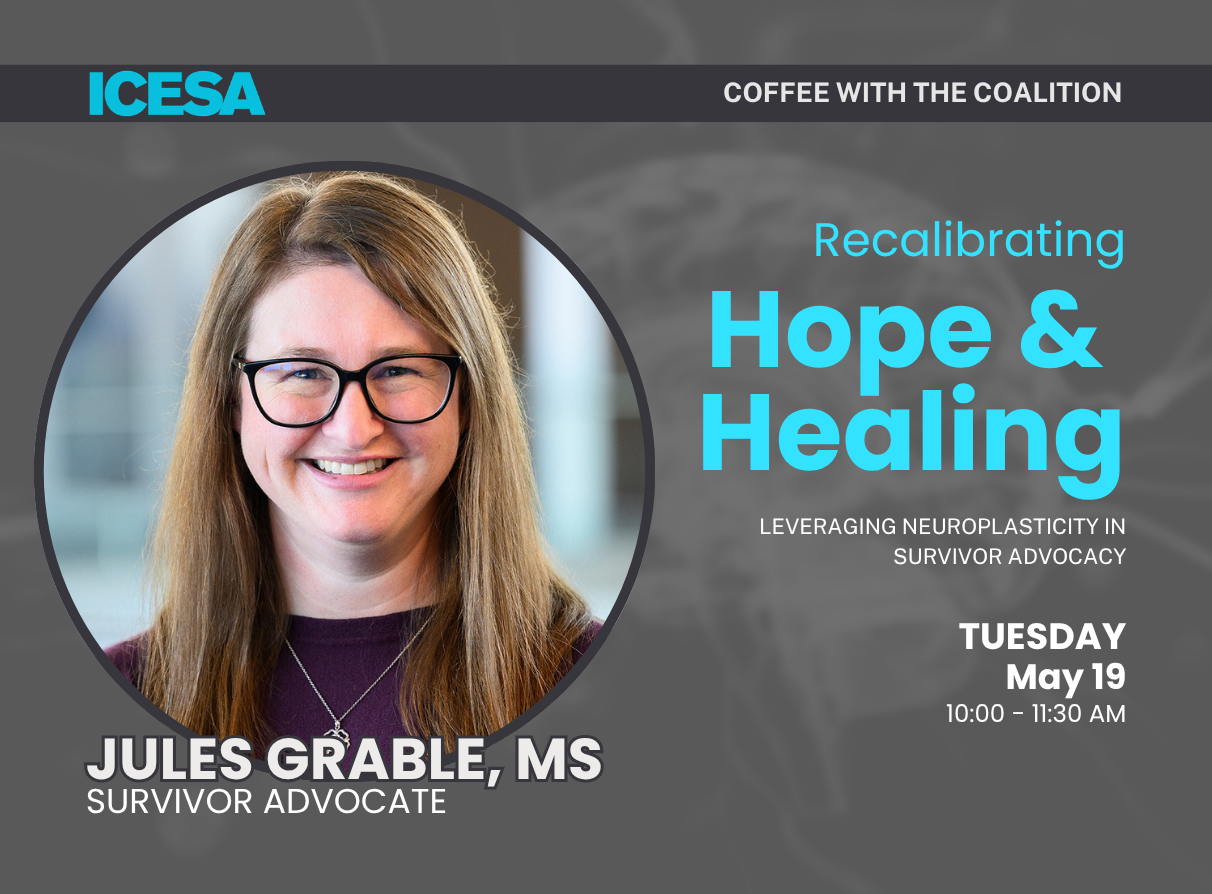
Jules Grable, MS, joins ICESA to discuss how victim advocates are well-versed in how the brain and body respond to crisis. However, understanding the biology of survival is only the first step. This session moves beyond the acute trauma response to explore the science of hope, healing, and repair. We will examine how neuroplasticity and the “science of hope” can help survivors move out of a state of perceived permanent threat and toward sustainable recovery. By reframing our support through the lens of neurobiology, advocates can provide survivors with a practical toolkit to recalibrate their nervous systems, reclaim their sense of safety, and begin the intentional journey of healing.
Julianne (Jules) Grable is Director of Student Advocacy at Butler University, where she chairs the campus care and behavioral intervention team and coordinates wraparound support for students of concern. She provides crisis response and advocacy for students, including survivors of sexual misconduct, and has over a decade of experience in violence prevention and crisis management. An adjunct faculty member, Jules teaches Mindfulness in Everyday Life and I’ve Got That Main Character Energy: Bouncing Back from IRL Plot Twists. She holds a master’s in Student Affairs and Higher Education, a graduate certificate in Applied Educational Neuroscience, and is a MIEA Mindfulness Instructor and 500-hour Registered Yoga Teacher.
No upcoming events found.
Copyright © 2025 Indiana Coalition to End Sexual Assault, Inc. All rights reserved.